That Cheap Dirt Work Bid Might Be Hiding an Illegal Dumping Problem
Gulf Coast Conservation
Cheap Dirt Work Can Get Expensive Fast
Estimated Read Time: 6–7 Minutes
If you have ever seen one of those local illegal dumping stories on the news, there is usually one uncomfortable truth sitting underneath it:
Somebody was trying to save money somewhere.
Maybe it was the customer looking for the cheapest haul-off price. Maybe it was the contractor trying to avoid disposal fees. Maybe it was a hauler trying to make a quick run without using an approved dump site. Either way, that “cheap” decision can turn into a much bigger problem when dirt, concrete, trees, stumps, trash, or construction debris ends up somewhere it does not belong.
And this is not just a junk removal problem. It happens in the dirt work world too.
Land clearing, pond construction, pad building, driveway work, road construction, grading, demolition cleanup, and fill dirt hauling all create material that has to be handled correctly. Dirt has to go somewhere. Trees and stumps have to go somewhere. Concrete and debris have to go somewhere. If that disposal plan is not built into the price, then the “deal” may not really be a deal.
It may just be a red flag with a lower number attached to it.
Illegal Dumping Is Not Just Something That Happens Somewhere Else
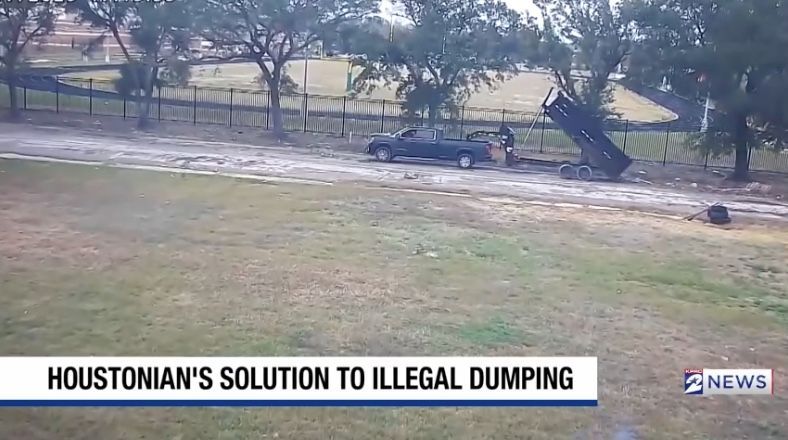
Houston has had plenty of public illegal dumping stories. Some involve household trash. Some involve construction debris. Some involve dirt and commercial hauling.
In one recent Houston-area report, KPRC reported that a trucking company and its owner were charged with state jail felony commercial illegal dumping after prosecutors alleged more than 22,000 pounds of dirt were dumped at an unauthorized site in southwest Houston.
In another Houston-area case, FOX 26 reported that a Channelview business owner was accused after officials alleged about 14 tons of concrete and wood debris were dumped near a waterway by the San Jacinto River. The owner denied the allegations, which is why it is important to say it carefully: these were allegations reported by officials and local news, not a final statement from Gulf Coast Conservation.
But the bigger point still matters for landowners:
When material leaves your property, you should care where it is going. When material is being brought onto your property, you should care where it came from. And when a dirt work price is way lower than everyone else, it is fair to ask what is being left out.
1
Why Cheap Dirt Work Can Be a Red Flag
A low price is not automatically bad. But it should make you ask better questions.
There are legitimate reasons one contractor may be cheaper than another. Maybe they own the right equipment. Maybe they are closer to the job. Maybe they have a better production plan. Maybe they already have material nearby. That happens.
But there is a difference between a competitive bid and a suspiciously cheap bid.
If one price is dramatically lower than every legitimate contractor you have talked to, it may mean important costs are missing. Dump fees may not be included. Hauling time may be underestimated. Erosion control may be skipped. The contractor may not be planning for proper disposal. Or worse, they may not really have a plan at all.
Dirt work is not just “push some dirt around and call it good.” Real site work includes planning, access, equipment, operators, fuel, trucking, disposal, drainage awareness, compaction, grading, cleanup, and common sense. All of that costs money.
When the price sounds too good to be true, sometimes it is because the real cost is being pushed onto someone else.
2
Bad Fill and Buried Debris Can Create Problems Later
Not all dirt is good dirt, and not all “cleanup” is really cleanup.
One of the easiest ways for a bad contractor to hide cost is by hiding material.
Trees, stumps, roots, concrete, trash, old fence, demo debris, and junk material can be buried instead of hauled off properly. To the landowner, the surface may look fine for a little while. The area gets covered, smoothed out, and everybody moves on.
Then the problems show up later.
Soft spots. Sinkage. Trash coming back up through the surface. Organic material rotting underground. Poor pad performance. Drainage issues. A future builder finding debris where clean, stable material should have been.
That is why disposal and fill quality matter. If a contractor is importing dirt, the landowner should know what kind of material is being brought in. If a contractor is removing debris, the landowner should know whether that debris is actually being hauled to the right place.
The cheapest option can become the most expensive option when you have to pay someone else to dig it back out and fix it.
Bad Dirt Work Can Also Create Drainage Problems
Illegal dumping gets attention because it is obvious. A pile of debris on the side of the road makes people mad fast. But bad dirt work can cause quieter problems too.
Moving dirt without understanding drainage can send water toward a neighbor, pond water in the wrong spot, block natural flow, wash sediment into ditches, or create erosion where the property used to drain fine.
In Southeast Texas, that matters. We are not working in dry, flat, perfect conditions. We deal with heavy rain, low ground, clay soils, ditches, flood-prone areas, and rural properties where one bad grade decision can create a long-term headache.
This is one of the biggest differences between “a guy with a machine” and a real site prep contractor. The goal is not just to make the property look different by the end of the day. The goal is to make sure the work makes sense after the next rain too.
3
Questions to Ask Before Hiring a Dirt Work Contractor
You do not need to know everything about dirt work. You just need to know what to ask.
Before you hire someone to clear land, haul material, build a pad, dig a pond, install a road, or clean up a property, ask a few simple questions.
Where is the debris going? What kind of fill material are you bringing in? Is haul-off included? Are dump fees included? How are you handling stumps, roots, concrete, or trash? What happens if the ground is wetter than expected? How are you making sure water still drains correctly when the work is done?
Good contractors do not get offended by those questions. They expect them.
The answers may not always be complicated, but there should be answers. If someone cannot explain their disposal plan, their hauling plan, or their basic approach to drainage, that is not a small detail. That is the kind of thing that can turn into a bigger problem once the job starts.
What Doing It the Right Way Looks Like
Doing dirt work the right way does not always mean making the job more complicated. It means being honest about what the job actually requires.
Sometimes that means debris needs to be hauled off instead of buried. Sometimes it means imported fill needs to be sourced properly. Sometimes it means the property needs erosion control. Sometimes it means the grading plan needs to change because water is telling you something different than the original idea.
At Gulf Coast Conservation, we are not trying to win work by being the cheapest number on every bid. We are trying to do the work in a way that makes sense for the property, the landowner, and the long-term use of the land.
That means looking at access, drainage, clearing, grading, material movement, disposal, and site readiness before acting like the only thing that matters is how fast a machine can start pushing dirt.
Because cheap dirt work is not cheap when it has to be fixed.
Get Help Before the Dirt Moves
If you are planning to clear land, build a pond, bring in fill, cut a pad, build a driveway, clean up a property, or move a large amount of material, do not just ask, “Who can do it the cheapest?”
Ask who understands the job.
Ask who has a real plan for the material. Ask who knows how water moves across the property. Ask who can explain what they are doing before they do it. Ask who is thinking about what the land will look like after the next rain, not just what it looks like when the invoice is due.
Gulf Coast Conservation helps landowners, builders, developers, and realtors across Southeast Texas with land clearing, pond construction, pad building, road work, drainage, erosion control, and overall site prep.
If you want the work done right, use the call button below or reach out through our contact page. We will help you make sense of the land before a cheap decision turns into an expensive problem.
Free Land Evaluation
Need dirt work done without the shortcuts?
Whether you are clearing land, building a pad, digging a pond, improving drainage, or cleaning up a property, Gulf Coast Conservation can help you plan the work the right way.
Referenced Public Reporting
This article references publicly reported illegal dumping cases from local Houston-area news outlets. The cases are discussed as reported allegations or charges and are used for general public awareness about proper disposal and responsible dirt work practices.